What You Get When We Work on Your Brand
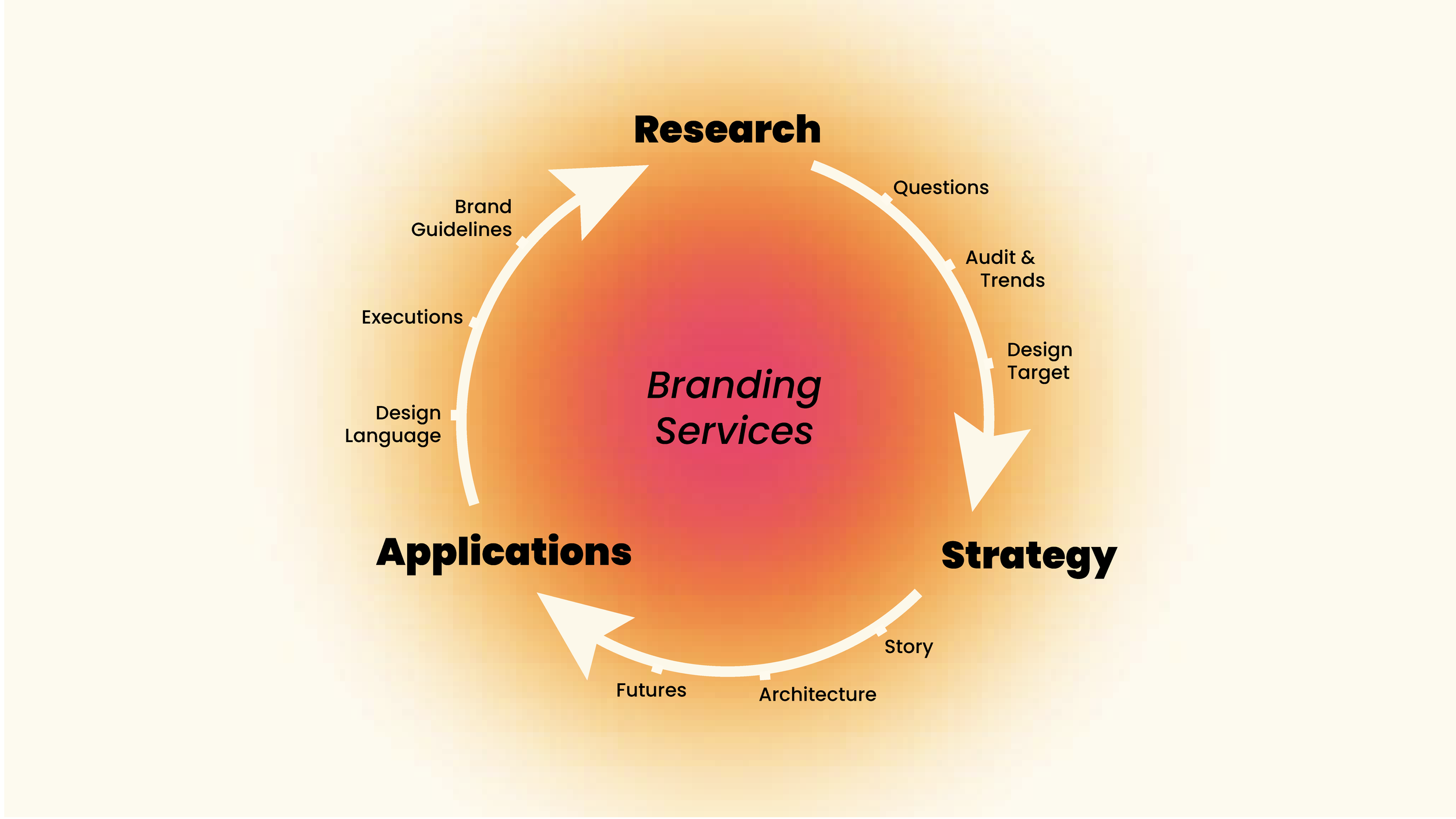
Most of all, you get a lasting relationship with a Master of Brand Design and Strategy who’s deeply invested in your success. Every contract is different, and certain scope may not be right for your project, but you will be given an expert suggestion and made well aware of whatever is in included in the scale you choose and why. Whatever that is, it will boil down at a minimum to:
Research - everything that’s happening concerning your brand and what it means for now and into the future; it starts with a bedrock of questions, turns to trends and a competitive audit, and finally hones in on what problem you’re solving and who you’re solving it for.
Strategy - research culls insights, and it’s with those earned nuggets of wisdom that we make strategic decisions, like what your story is and how to tell it, how your brand shapes up and presents itself, and finally future-proofing it for the next handful of years.
Applications - every touchpoint by which your brand will be recognized develops in the applications phase; we establish the look and feel, imagery and fonts, words and marks and more in tactical executions best suited for brand value, all summed up in guidelines.
1
Research
Questions
20 questions won’t be nearly enough. But don’t worry, I treat this as a conversation to deeply understand what problem we’re solving, who we’re solving it for, and why you love what you do. It happens in two inquisitive phases over almost 40 q’s: Background & Branding.
What problem are you solving?
Who are you solving for?
What are your businesses?
What are your current business objectives?
Who are the competing orgs?
Background
By which expressions do you intend to be recognized?
Are there expressions you don’t want to be recognized/known for?
Who is our audience?
What is your current brand perception?
How do you want to be known?
Branding
A sampling is included here so you get an idea of the insights we’re searching for - what you’re doing, for who, and most importantly why.
Audit & Trends
To kick things off after we have a full consensus, I’ll deeply research trends on a generational scale, then keep digging into macro and micro trends, so the last 5 years up til about the most recent 20 inclusive.
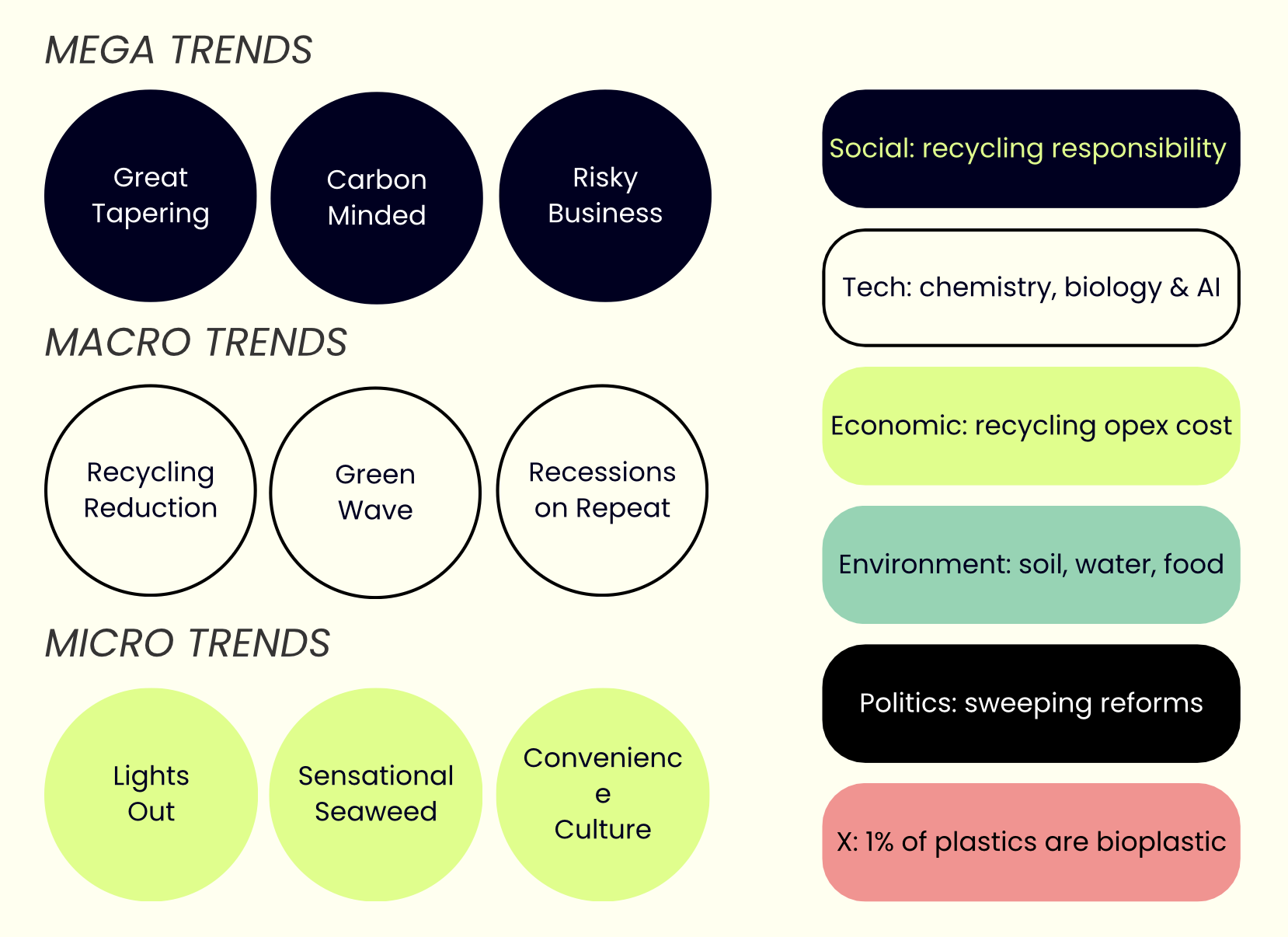
Whatever is happening surrounding and concerning your business, we’ll suss it out. And with that research comes strategic implications and opportunities.
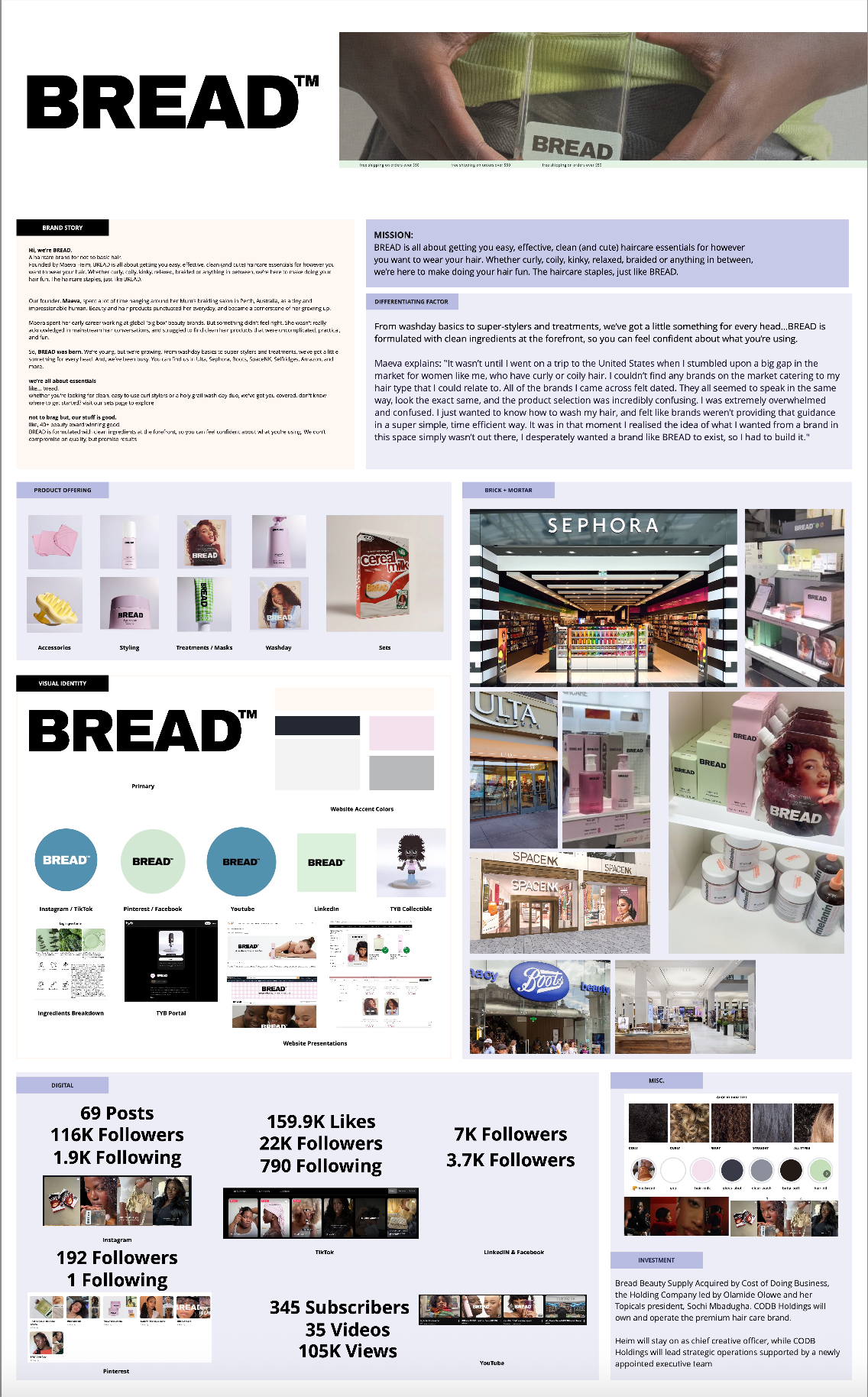
Then, I’ll investigate, archive, and present competitors both direct and indirect across visual identity systems, stories and naming etc. We need to know how culture is influencing target audience decisions, and if we’re rebranding we need to know how you and your competitors look so we can strategically stand out.
Design Target
To truly have the most strategic advantage and brand architecture, you need to know your design target.
Your Design Target, if creating a new brand, is a research-driven understanding of brand positioning down to a tagline. If you are rebranding, it is the same albeit driving towards finding out how you need to show up for your current design target.. Either way, you need to know what problem you are solving and who for.
Consumption Audience
Aspirational Audience
Design Target
Influencers



2
Strategy
Architecture
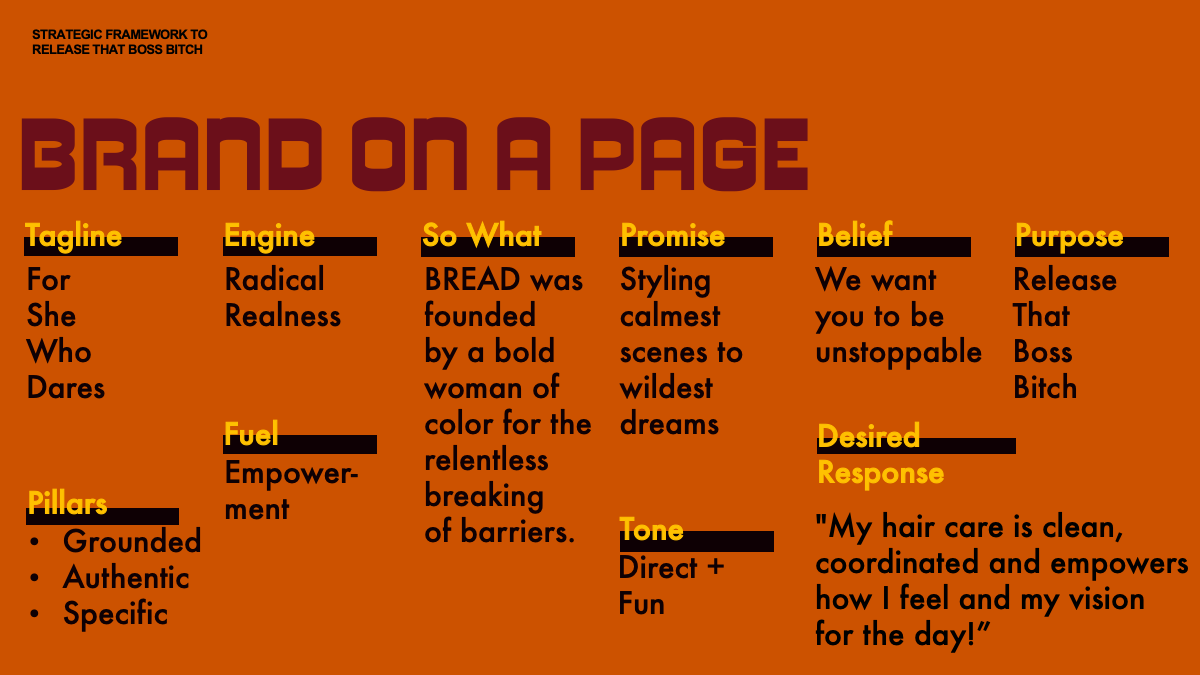
This process boils down to your brand on a page, a one-pager covering everything from positioning, promise, a rally cry and a killer tagline.
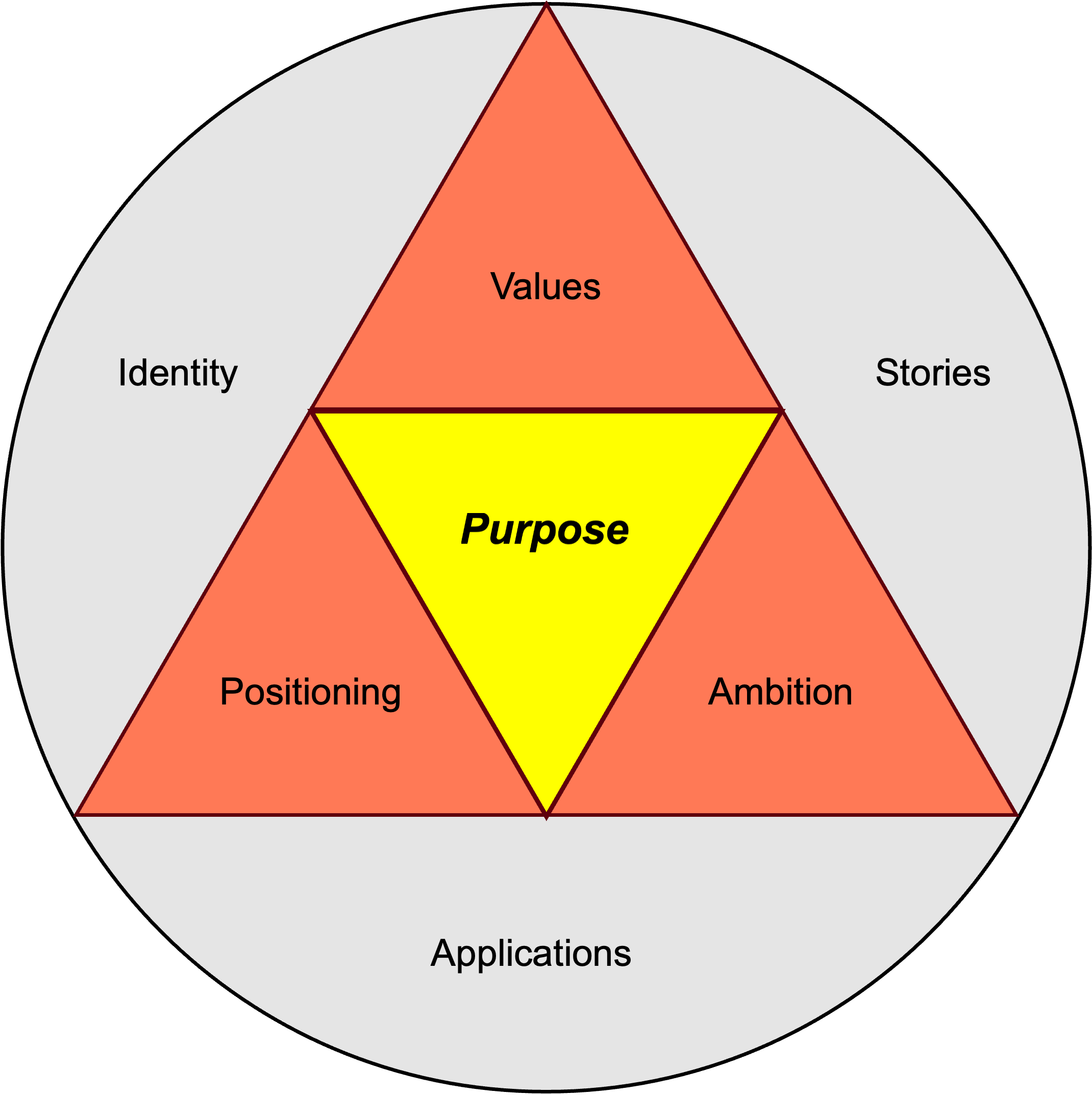
However, I’m not content to take one approach, and also like to think about all the touchpoints with which you want your brand to be recognized. So, I also use another branding framework that revolves around positioning, purpose and promise.
Ultimately we’ll be able to succinctly state your only-ness, why your brand exists, and what you could honestly chant about yourselves.
Story
How do you really define the story of a brand? Why do you need to?
Your brand story is more than just the founding and current state of affairs, it is every word connected to your brand.
It’s important to know how you are being perceived not just visually, and to make sure everything agrees across your brand.
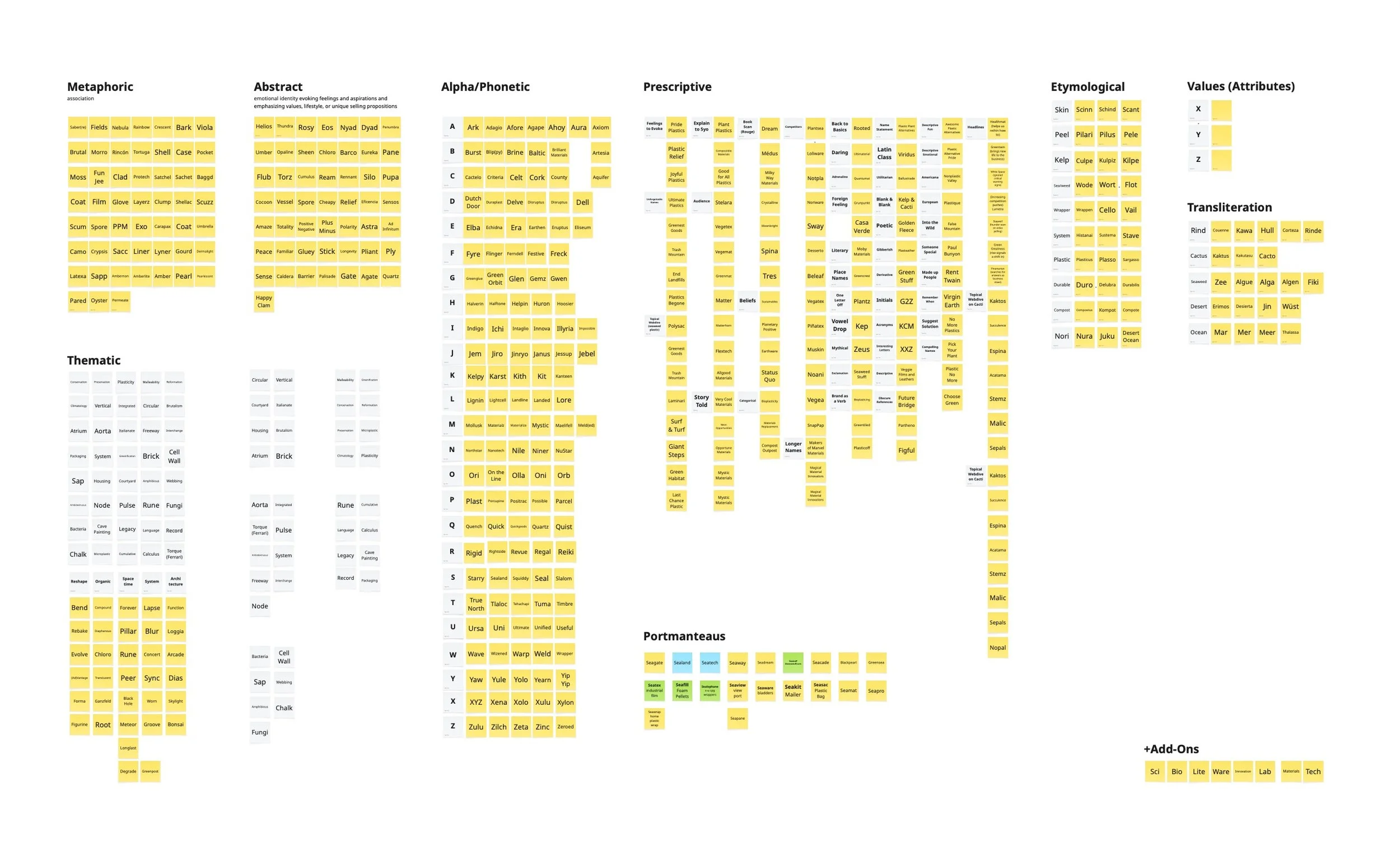
Pictured here are 500 Names…
just the beginning.
The story, the naming, all of the magic of words boiled down to a few key messages if need be, but ultimately the culmination of countless hours of work all dedicated to your story.
Futures
There are multiple orders of futures thinking in terms of the wheel:
Preferred Future
Direct Impacts
Indirect Impacts
Nebulous Future
4th Effect
There are also ways to think about possible and preferred futures in terms of the futures cones.
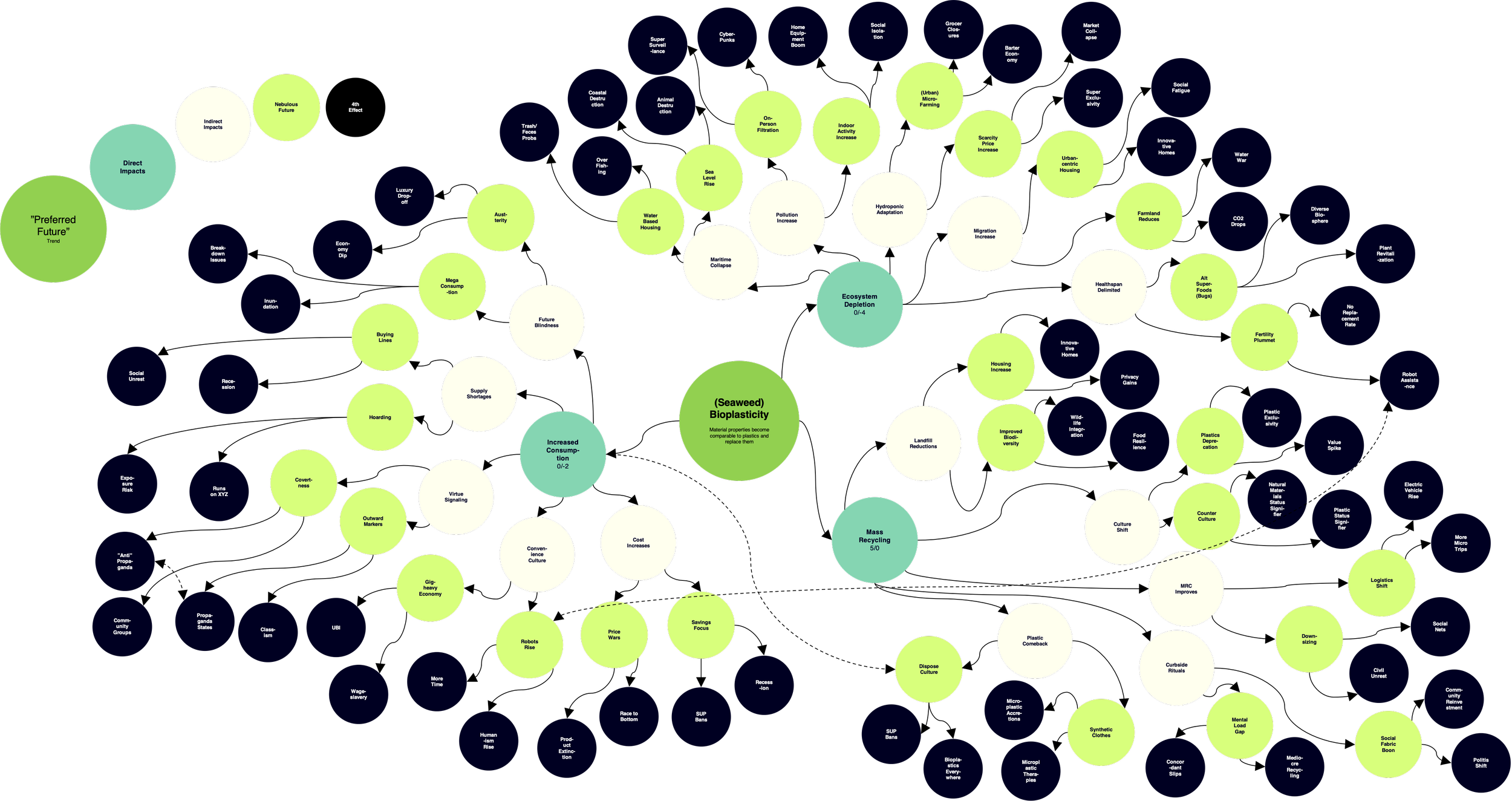
Whatever is best for your brand is the futures thinking that will be performed. And whatever we execute will be strategically sourced and thought out so that we are aligned in what can happen to your business, what we want to happen, and then, most importantly, what we need to do to make it happen. Go futures thinking!
3
Applications
Design Language
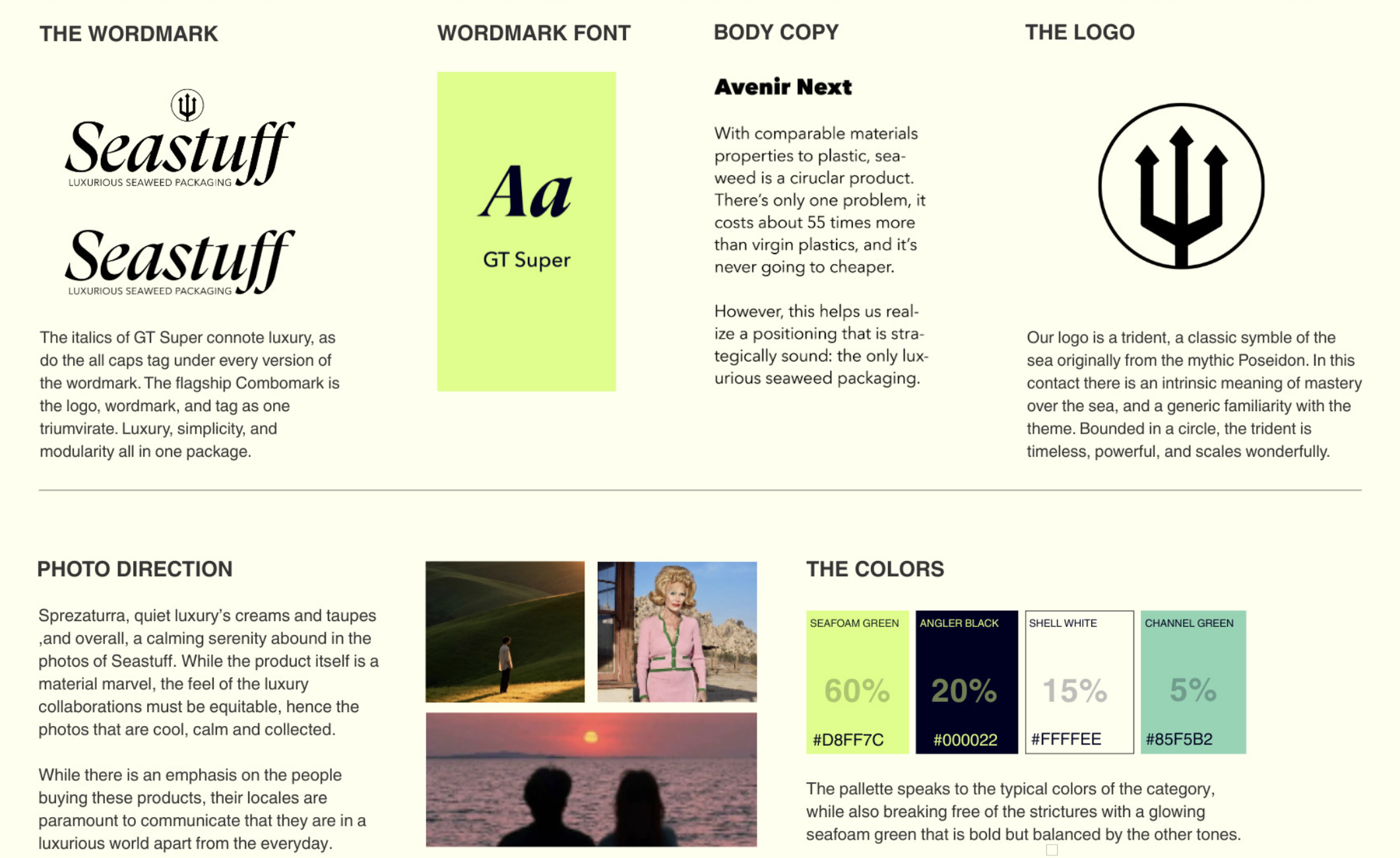
This spans your logo, graphics, imagery, layouts and more. Language is the sum of communicative elements, and as far as branding is concerned, that returns to the beginning of this process - everything by which you intend your brand to be recognized.
Design language is complicated, but we simplify it by iterative processes that culminate in brand guidelines - more on that soon!
Executions
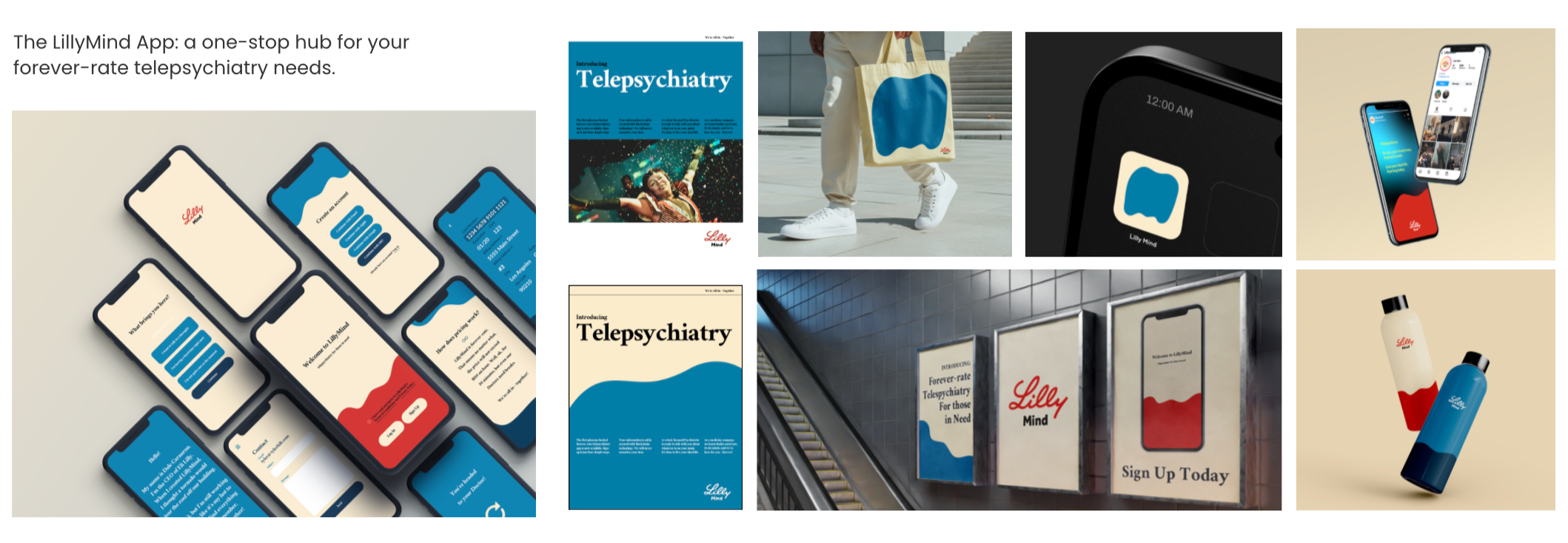
One of the most fun parts of branding, this is where you put the pedal to the metal and really start seeing your brand come to life, which is to say you stick to you brand drivers and architecture to create strategically sound executions of brand touchpoints.
Brand Guidelines
Everything you need in one deck, or website, or what have you. How to use you writing, your design language, and more in a one stop shop. For more details, please request the full brand strategy playbook.